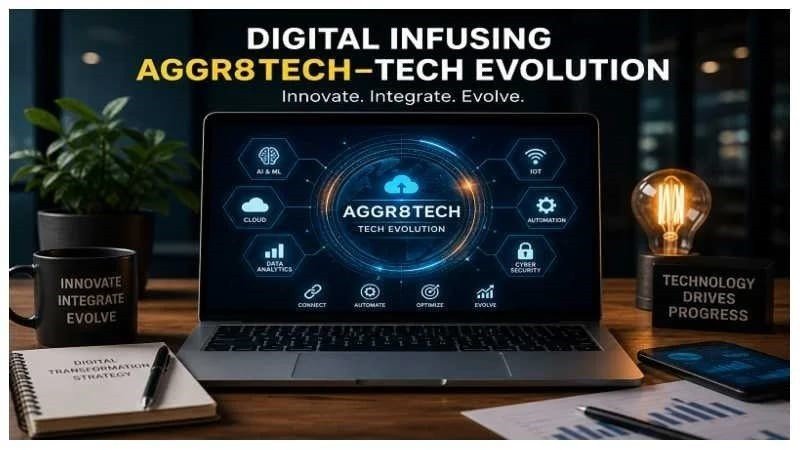
The agricultural industry has entered a transformative era where digital innovation is reshaping traditional farming practices into highly efficient, data-driven ecosystems. Among the emerging concepts driving this evolution, Digital Infusing Aggr8Tech stands out as a forward-thinking approach that integrates advanced digital technologies into modern agriculture. Rather than relying solely on conventional methods, farmers and agribusinesses are embracing intelligent tools that enhance productivity, sustainability, and profitability.
Digital Infusing Aggr8Tech represents the convergence of agriculture with cutting-edge technologies such as Artificial Intelligence (AI), the Internet of Things (IoT), big data analytics, cloud computing, and automation. This integration empowers farmers to make informed decisions, optimize resource utilization, and address global challenges such as climate change, food security, and labor shortages.
As the world’s population continues to grow, the demand for smarter agricultural solutions has never been greater. Digital Infusing Aggr8Tech offers a practical pathway toward sustainable farming by combining technological intelligence with agricultural expertise. This article explores the concept in depth, highlighting its technologies, applications, benefits, challenges, and future potential.
What is Digital Infusing Aggr8Tech?
Digital Infusing Aggr8Tech refers to the strategic implementation of digital technologies throughout agricultural operations to improve efficiency, increase crop yields, reduce operational costs, and promote environmental sustainability. It is not merely about using modern equipment but about creating an interconnected agricultural ecosystem where machines, sensors, software, and data work collaboratively.
Unlike traditional farming, where decisions often depend on experience and observation, Aggr8Tech enables real-time monitoring, predictive analysis, and automated decision-making. Farmers gain access to precise information regarding soil health, weather conditions, crop performance, irrigation schedules, and pest management.
This digital transformation enables agriculture to evolve from reactive farming to proactive and predictive farming.
Core Technologies Behind Digital Infusing Aggr8Tech
Several advanced technologies serve as the backbone of Digital Infusing Aggr8Tech. Together, they create intelligent farming systems capable of maximizing efficiency while minimizing waste.
1. Artificial Intelligence (AI)
Artificial Intelligence plays a central role in modern agriculture by analyzing vast datasets and generating valuable insights. AI algorithms can predict crop diseases, estimate harvest yields, identify nutrient deficiencies, and recommend optimal planting schedules.
Machine learning models continuously improve their accuracy as they process more agricultural data, making farming decisions increasingly reliable.
2. Internet of Things (IoT)
IoT devices connect fields, machinery, weather stations, and irrigation systems into one intelligent network. Smart sensors monitor variables such as:
- Soil moisture
- Temperature
- Humidity
- Nutrient levels
- Crop growth
- Water availability
This continuous stream of information allows farmers to respond immediately to changing field conditions.
3. Big Data Analytics
Agriculture generates enormous amounts of information every day. Big Data Analytics organizes and interprets this data to identify patterns, forecast production, and improve resource allocation.
By studying historical trends alongside real-time information, farmers can make evidence-based decisions that significantly improve productivity.
4. Cloud Computing
Cloud platforms provide centralized storage for agricultural data while enabling remote access from smartphones, tablets, or computers.
Farmers can monitor multiple farms simultaneously, collaborate with agricultural experts, and access reports without being physically present in the fields.
5. Agricultural Automation
Automation includes autonomous tractors, robotic harvesters, automated irrigation systems, and drone-assisted monitoring.
These technologies reduce manual labor while increasing operational precision and consistency.
Applications of Digital Infusing Aggr8Tech
Digital Infusing Aggr8Tech plays a vital role in almost every area of modern agriculture, enhancing farming operations through innovative digital solutions and intelligent technologies.
Precision Farming
Precision farming ensures that every section of a field receives exactly the amount of water, fertilizer, and pesticides it requires.
Rather than treating an entire farm uniformly, precision agriculture targets individual areas based on actual conditions, reducing waste and improving yields.
Smart Irrigation
Water scarcity is becoming a global concern. Smart irrigation systems use sensor data and weather forecasts to determine when irrigation is necessary.
This significantly reduces water consumption while maintaining healthy crop growth.
Crop Monitoring
Drones equipped with high-resolution cameras capture detailed aerial images of farmland.
These images help identify:
- Plant diseases
- Pest infestations
- Nutrient deficiencies
- Water stress
- Growth irregularities
Farmers can intervene early before problems spread throughout the field.
Livestock Management
Digital Infusing Aggr8Tech also benefits livestock farming.
Wearable sensors monitor animal health, feeding behavior, movement patterns, and body temperature.
Early disease detection improves animal welfare while reducing veterinary costs.
Supply Chain Management
Digital technologies improve transparency throughout the agricultural supply chain.
Consumers increasingly demand information about food origins, production methods, and sustainability practices.
Blockchain technology and cloud databases provide traceability from farm to market.
Benefits of Digital Infusing Aggr8Tech
The integration of digital technologies delivers numerous advantages for farmers, businesses, consumers, and the environment.
Increased Productivity
Real-time insights enable farmers to optimize every stage of crop production.
Improved planning leads to higher yields and more efficient farm management.
Cost Reduction
Automation reduces labor expenses, while precision farming minimizes unnecessary use of fertilizers, pesticides, fuel, and water.
Operational efficiency directly contributes to higher profit margins.
Sustainable Agriculture
Digital farming promotes environmentally responsible practices.
Efficient resource utilization decreases pollution, conserves natural resources, and reduces greenhouse gas emissions.
Better Decision-Making
Instead of relying solely on intuition, farmers use accurate data and predictive analytics to make informed decisions.
This minimizes uncertainty and improves long-term planning.
Climate Change Adaptation
Extreme weather conditions pose serious risks to agriculture.
Digital forecasting systems help farmers prepare for droughts, floods, heatwaves, and storms before they occur.
Challenges of Digital Infusing Aggr8Tech
Despite its tremendous potential, several obstacles limit widespread adoption.
High Initial Investment
Advanced agricultural equipment, IoT sensors, drones, and AI software require significant financial investment.
Small-scale farmers may struggle to afford these technologies.
Limited Digital Literacy
Many farmers require training to effectively operate modern digital systems.
Without proper education, advanced technologies may remain underutilized.
Internet Connectivity
Reliable internet access remains unavailable in many rural areas.
Since many digital platforms rely on cloud connectivity, weak infrastructure can hinder implementation.
Data Security
Agricultural data contains valuable business information.
Protecting this information from cyber threats requires strong cybersecurity measures.
Future Trends in Digital Infusing Aggr8Tech
The future of agriculture will become increasingly intelligent and interconnected.
Several innovations are expected to shape the next generation of digital farming.
AI-Powered Predictive Agriculture
Artificial Intelligence will become even more accurate at forecasting crop diseases, weather patterns, market demand, and production outcomes.
Autonomous Farming Equipment
Self-driving tractors, robotic harvesters, and automated planting machines will become more affordable and widely adopted.
Digital Twins
Digital twins create virtual replicas of farms.
Farmers can simulate different farming strategies before applying them in real-world conditions, reducing risk and improving outcomes.
Blockchain Integration
Blockchain technology will improve transparency, food safety, and traceability throughout agricultural supply chains.
Consumers will have greater confidence in food quality and sourcing.
Advanced Robotics
Future agricultural robots will perform complex tasks including harvesting delicate fruits, identifying weeds, and applying fertilizers with exceptional precision.
Why Digital Infusing Aggr8Tech Matters
Global food demand continues to rise while agricultural land, freshwater resources, and labor availability become increasingly limited.
Digital Infusing Aggr8Tech addresses these challenges by enabling farmers to produce more food using fewer resources.
Beyond improving productivity, digital agriculture strengthens food security, supports rural economies, protects ecosystems, and enhances resilience against climate uncertainty.
Governments, agricultural organizations, technology companies, and educational institutions all have important roles in accelerating digital adoption.
Investment in infrastructure, farmer education, research, and innovation will determine how successfully agriculture adapts to future demands.
Conclusion
Digital Infusing Aggr8Tech represents far more than a technological trend—it is a revolutionary movement that is redefining agriculture for the twenty-first century. By integrating Artificial Intelligence, Internet of Things (IoT), Big Data Analytics, Cloud Computing, and Precision Farming, this innovative approach empowers farmers to cultivate crops more efficiently, sustainably, and profitably.
Although challenges such as implementation costs, digital literacy, connectivity, and cybersecurity remain, continuous technological advancement is making smart farming increasingly accessible across the globe. As governments, researchers, and private enterprises continue investing in agricultural innovation, Digital Infusing Aggr8Tech will play an indispensable role in ensuring global food security and environmental sustainability.
The future of farming is undeniably digital. Embracing Digital Infusing Aggr8Tech today means preparing agriculture to meet tomorrow’s challenges with intelligence, resilience, and innovation. Read More techmindora